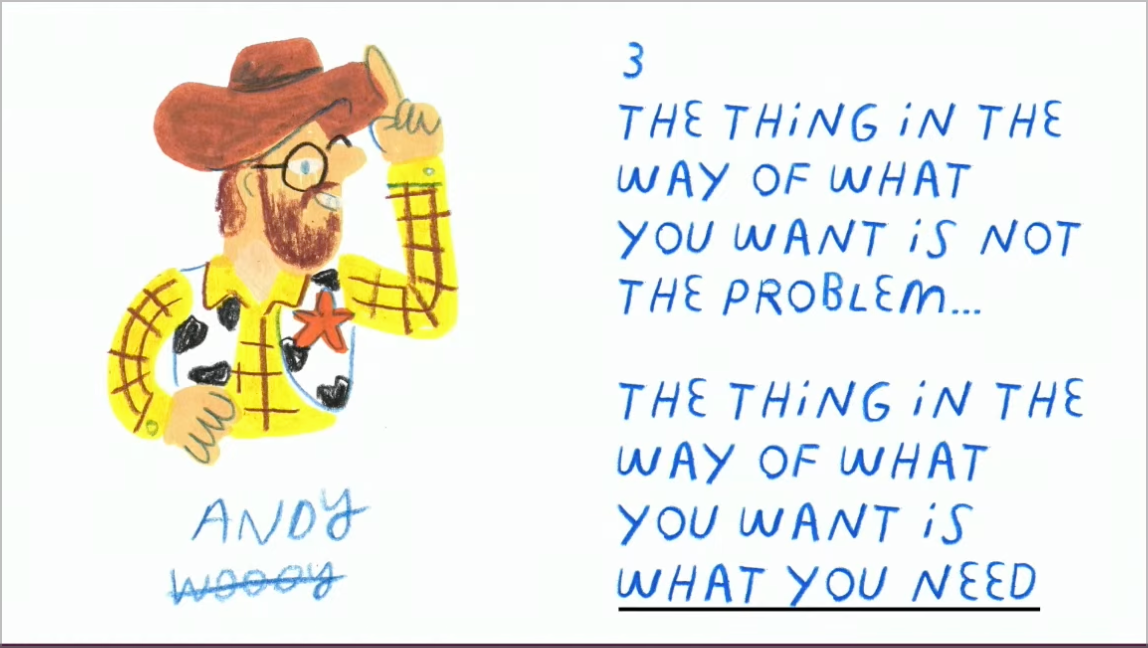
From Andy J. Pizza’s Keynote on Squarespace Circle Day 2026
AI is changing how we build for the web, and after this year's Circle Day, I'm more convinced than ever that there's an enormous opportunity for the people willing to change with it.
For a brief moment during Squarespace Circle Day 2026, I wondered whether the company was about to introduce the very thing that would replace its own community of web professionals.
We were all a little on edge for a second.
Squarespace had just unveiled Forma, its new AI-native platform for building websites and applications. The possibilities were exciting, but the obvious question was: Where does this leave the people who've spent years building businesses around Squarespace?
Fortunately, the answer came fast enough for people not to freak out.
Forma isn't replacing Squarespace 7.1. It's a parallel product that opens up new possibilities for builders and developers who've wanted more from the platform.
I've spent more than a decade helping people build and grow their businesses online with hundreds of websites built on Squarespace. I've watched the platform evolve, waited out its missteps, and advocated for improvements directly with its product teams.
One thing I've always appreciated about Squarespace is that it takes feedback seriously, even if it sometimes takes a little too long to act on it.
This year's Circle Day had plenty of exciting announcements, a few things I still want to see, and something I wasn't necessarily expecting: a renewed sense of possibility about the work we do.
Squarespace is thinking bigger than websites
One of the most interesting ideas of the day came from Squarespace President Kevin Doerr, who shared a vision of websites, applications, and AI agents built on top of a common foundation of what he called primitives.
The term was new to me, but the concept clicked. Think domains, email, customer data, and other foundational pieces of a business's digital infrastructure.
Today, most small businesses cobble together a collection of platforms to run their operations. A website here, a CRM there, an appointment scheduler somewhere else, and a handful of integrations holding everything together.
It works, until it doesn't.
Squarespace is thinking beyond the website as a standalone destination. The bigger idea is that websites, applications, and intelligent agents could eventually operate on the same underlying infrastructure.
With its acquisition of Google Domains, alongside its commerce and business tools, Squarespace has some meaningful infrastructure to build on.
I'm particularly excited about what this could mean for small businesses. Instead of paying for a collection of products and hoping they work together, imagine being able to build what you need on a shared foundation.
The goal is less time managing technology. More time actually running the business.
Some welcome improvements (and a few overdue ones)
Jeff Aldrich also walked us through improvements to Squarespace 7.1. I met with Jeff a few years ago to discuss product enhancements, and I've always appreciated how much he cares about the platform and the people using it.
Among the announcements, here's what stood out:
Autosaving drafts and version history. Finally! Anyone who's lost work in a content editor knows how welcome this is.
Improved customer profiles. I'm interested in where this goes. A more capable, built-in CRM could be enormously useful for small businesses.
Linkable Stacks, custom backgrounds, and gradients. More design flexibility without needing custom code.
Vertical video blocks and spacing controls. Practical additions for people creating content.
MCP capabilities. A promising start, although I'm hoping we get much more than read-only access.
Some of these features are long overdue, but I'm happy to see them coming.
What was clear from the chat, however, is that many people are wanting serious investment in Collections, particularly Blogs and Events. I'd love to use tools like ChatGPT or Claude to create and manage blog posts, products, and events directly within Squarespace. So would my clients.
Tom Smeaton on why AI recommends some businesses and ignores others
My favorite presentation of the day came from Squarespace SEO Manager Tom Smeaton.
I've been talking with clients about AI visibility for a while, but Tom gave us a useful way to think about what's happening:
We're moving from trying to rank in search results to trying to be recommended by AI.
For years, businesses have invested in SEO to get their websites in front of people searching for their services. Now, people are also asking AI tools who they should hire, what they should buy, and which businesses they should trust.
And those tools aren't looking exclusively at your website.
Tom shared research conducted with Peec AI examining approximately 1.3 million citations in AI-generated responses across service industries.
A few findings stood out:
ChatGPT frequently referenced long-form articles and established informational sources.
Google AI Mode showed a surprising reliance on social content, particularly Instagram.
Perplexity leaned heavily on listicles and comparison-style content.
Another interesting finding: tutorials sometimes surfaced more prominently than the service providers themselves.
A business could have a beautifully designed website and still be overlooked in favor of a helpful article, a specialized directory, or a company that someone else has written about.
Now, I wouldn't interpret this as a reason to start publishing everywhere. AI search is still evolving, and different platforms have different preferences.
But it reinforces something I've been telling clients for years:
Your website is your foundation. Your reputation is built everywhere else.
Partners and Alliances: Why relationships matter more than ever
I use a framework called Partners and Alliances when advising clients:
Partners are the people and organizations you collaborate with, exchange referrals with, or work alongside.
Alliances are the networks and communities you belong to, including chambers of commerce, professional associations, industry groups, and specialized communities.
These relationships have always been good for business. Now, their digital footprints may also help establish your credibility with AI search tools.
A mention in an industry publication, a profile in a relevant directory, or a case study published by a partner can communicate something your own website can't: other people recognize your expertise, too (and this goes a ridiculously long way).
The more specific that expertise, the better.
With that said, my advice to clients hasn't changed much:
Build a strong home on the web. Your website is still the one digital property you control. This is why we call it a Digital Foundation.
Be specific about your expertise. Detailed case studies, specialties, and real examples give people a reason to choose you.
Build meaningful relationships. Get involved in the organizations, directories, publications, and communities relevant to your industry.
Create genuinely helpful content. Tutorials, comparisons, and useful articles can do more for your visibility than another generic service page.
The goal isn't to be everywhere. It's to show up in the places that make sense for your business and give people good reasons to recommend you.
The changing role of the web professional
The panel with Will Myers, Becca Harpain, and Dave Hawkins brought the conversation back to the people doing the work, and I particularly appreciated Will's honesty about how quickly everything is changing and the uncertainty that comes with it.
Tools that once required years of technical experience are becoming more accessible. Prototyping is faster, creating applications is easier, and the distance between having an idea and building something is shrinking.
For someone like me, who has more ideas than time to execute them, that's exciting. But what happens to the professionals who built their businesses around those technical skills?
I've said for years that web designers should be moving toward consulting and advisory work. Building a website is one part of helping a business succeed online. Knowing what to build, why it matters, and whether it's worth the investment is another thing entirely.
AI can help with execution. It doesn't automatically make good decisions.
The professionals who can understand a client's business, exercise good judgment, and help people navigate increasingly complicated choices have an opportunity to become more valuable than ever.
I also loved an idea that came up about professional communities. Rather than selling people a list of membership benefits, what if the invitation was simply, Let's figure this out together?
Nobody has all the answers about where AI is taking our industry. There's a lot of value in having people to experiment with, exchange ideas with, and learn alongside.
That's something I hope Circle continues to nurture.
Anthony Casalena is enthused over what’s possible and it’s awesome
Speaking of people behind the platform, it was lovely seeing Squarespace founder and CEO Anthony Casalena talk about Forma.
He was so excited which was clearly visible (and I think much needed to see by this particular room of professionals).
If you don’t know, Anthony founded Squarespace in 2003 and more than two decades later, is still leading the company. That is rare. And seeing him genuinely enthusiastic was encouraging.
He also brings in local, live musical performances to the Day which is one of those distinctly creative and human decisions that I personally really love about the company.
The thing in the way might be the thing we need
Finally, Andy J. Pizza, illustrator and host of the Creative Pep Talk podcast, delivered the keynote, and one his slides (pictured above) spoke to us all. It said:
The thing in the way of what you want is not the problem. The thing in the way of what you want is what you need.
That stuck, even if it was begrudgingly sticky.
AI is changing how we work, what we charge for, and which skills people are willing to pay for. It's understandable that professionals have questions about what comes next, but I think there's a more interesting conversation to have:
What can we do now that we couldn't do before?
Who can we help that we couldn't afford to serve before?
What becomes possible when building something no longer requires as much time or technical expertise?
A commitment to helping 10,000 people with their website
During Circle Day, I became weirdly obsessed with a stat: more than 4 million customers are using Squarespace 7.1.
For whatever reason, that number really got to me.
I started thinking about how many of those people have websites they don't know how to use particularly well. How many are struggling with something simple, missing an opportunity, or paying for help they may not actually need?
I've worked with hundreds of businesses, and I've learned that not everyone needs a new website. Sometimes they need someone to show them how to get more from the one they already have:
A tutorial. A workshop. A resource. A better way to think about a problem.
With all these new tools at our disposal, we have an opportunity to help people at a scale that simply wasn't practical before.
So I've made a commitment:
I want to help 10,000 people get more from their websites by December 2027.
Not build 10,000 websites. Help 10,000 people.
I haven't figured out every detail of what that will look like yet. It'll probably involve a combination of tutorials, practical tools, workshops, and resources that make it easier for people to do things themselves, but for the first time, that kind of scale feels entirely possible.
And I think that's what I appreciated most about this year's Circle Day:
The welcome reminder it's a great time to be a builder.